Mining operations don’t always achieve the production nameplate capacity their plants were designed for. In some cases, the limitation isn’t the processing equipment itself, but the transfer chutes responsible for moving material between stages of the operation.
When difficult material causes recurring blockages, spillage or flow interruptions, operators can become accustomed to running their plants below nameplate capacity to avoid problems. While this can make operations more predictable in the short term, it can also result in significant lost production over time.
According to Gian Naldi, Materials Handling Engineer at Chute Technology, addressing the underlying transfer chute problems can help mining operations recover this lost capacity and achieve more consistent performance.
“One of the things we see is that sites become comfortable operating at a reduced rate because they know what will happen if they push the plant harder,” says Naldi.
“They might have a plant designed for 2,200 tonnes per hour, but if certain material conditions cause blockages, they’ll deliberately run it at 1,800 tonnes per hour. That avoids some of the immediate problems, but they’re also accepting a significant reduction in what the plant could potentially produce.
“Our objective is to help bring average performance closer to peak performance, so the operation can achieve its intended capacity without having to compromise reliability.”
The hidden cost of conservative operating practices
The production implications can be substantial. A mine producing below its nameplate capacity is not only losing immediate throughput but also making production planning and forecasting more difficult.
If operators cannot reliably predict how a particular material will behave, they may build additional allowances into production schedules or deliberately limit throughput to avoid unexpected delays.
Chute Technology sees opportunities to address these limitations by investigating how different material characteristics affect flow through existing transfer systems.
Wet and sticky material, coarse particles, free-flowing products, and fine material containing moisture can all behave differently during transfer. Understanding these characteristics, and how they interact with chute geometry and operating conditions, is essential to developing an effective solution.
“Sometimes a site will accept that a particular product is difficult to handle and that they need to slow the plant down when they’re processing it,” Naldi explains.
“But we need to ask why that material is causing problems. Is it accumulating because of the transfer geometry? Is the material experiencing excessive pressure or impact at a particular point? What is happening when the flow rate or product mix changes?
“Once we understand the actual cause, we can start looking at how to improve the transfer rather than simply working around the problem.”
Using DEM to identify and validate improvements
Chute Technology combines its materials handling experience with Discrete Element Method (DEM) modelling to investigate existing transfer arrangements and evaluate potential improvements.
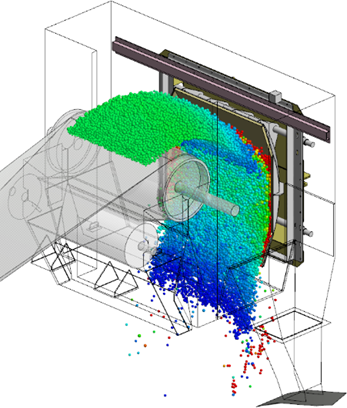
Rather than relying solely on the symptoms observed during operation, engineers can use DEM to examine how different materials behave within a transfer point and identify why particular configurations are performing poorly.
This is particularly useful when investigating recurring issues such as blockages, spillage, excessive liner wear, and inconsistent belt tracking.
Operational information, including delay reports, can help identify which products and operating conditions are associated with poor performance. Chute Technology can then relate these findings to the material input cycle, assess the relevant characteristics, and use DEM to investigate the underlying mechanisms.
The resulting analysis helps engineers identify where a transfer chute needs to change and validate potential improvements before committing to fabrication.
“DEM gives us the ability to investigate different material conditions and see what is actually happening inside the chute,” says Naldi.
“We can look at why one product transfers successfully while another causes problems, and assess what needs to change to accommodate both.
“That might involve the shape of the chute, its height, the transfer angle or, importantly, the precise point where the material meets the sliding surface. Getting that interaction right can make a substantial difference to how material flows through the system.”
Understanding the forces behind material build-up
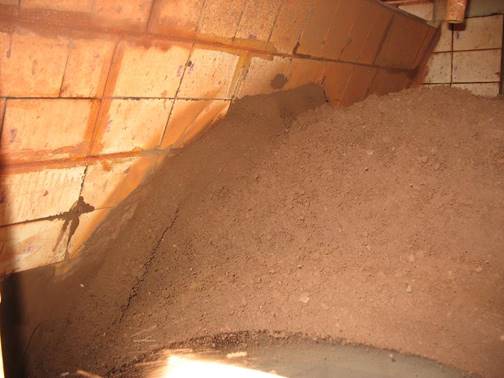
One of the important considerations in handling sticky material is understanding why it adheres to a surface in the first place.
Material pressure and impact at the transfer surface can influence whether material continues moving or begins to accumulate. Controlling these interactions through appropriate chute geometry is therefore a critical part of the design process.
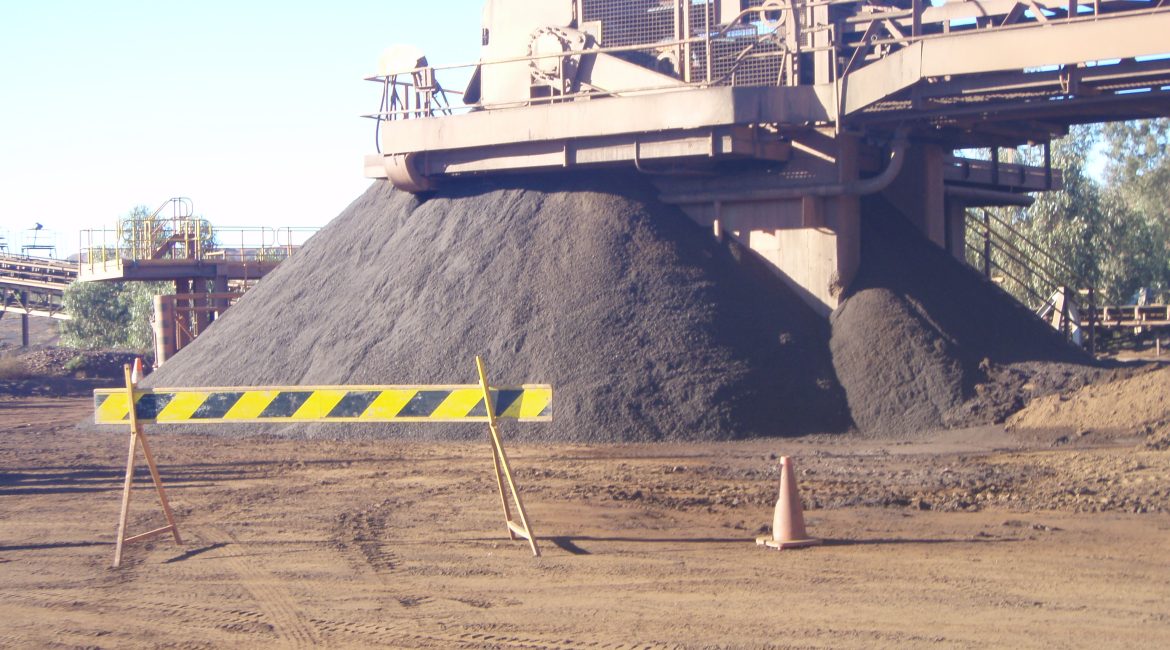
“We often see this in iron ore operations, where mining can eventually reach the water table and introduce wetter, stickier material into the processing stream,” explains Gian.
In some cases, operations respond by moving to another mining area rather than attempting to handle the more challenging material. However, with the right transfer chute design, it may be possible to maintain production capacity while processing material that would otherwise cause difficulties.
Chute Technology uses DEM to assess existing arrangements, investigate alternative geometries and compare predicted performance before and after modifications.
Its approach draws on decades of accumulated knowledge, engineering experience, software development and understanding of bulk material behaviour.
Upgrading existing infrastructure rather than replacing it
The benefits extend beyond throughput. Poorly performing transfer chutes can create additional costs through spillage clean-up, excessive liner replacement, maintenance labour and equipment hire.
Belt tracking problems can also emerge as flow rates and product characteristics change, while older transfer arrangements may have excessive drop heights or geometries that no longer suit current operating requirements.
In some situations, these problems contribute to decisions to build new processing infrastructure when a targeted upgrade to the existing transfer system could be a more cost-effective option.
For Naldi, the important distinction is having the tools and information to understand what is happening and make better engineering decisions.
“Engineers weren’t necessarily designing bad chutes in the past. They didn’t have the same tools, data and modelling capabilities available to them that we have today,” he says.
“We’ve continued to refine our knowledge, processes and software over many years. That allows us to look at problems differently and develop solutions based on what the material is actually doing.
“Ultimately, it’s about helping a plant achieve the performance it was designed for, across the different materials and operating conditions it needs to handle. We don’t want operators to have to accept reduced production simply because a transfer chute can’t cope with a particular product.”