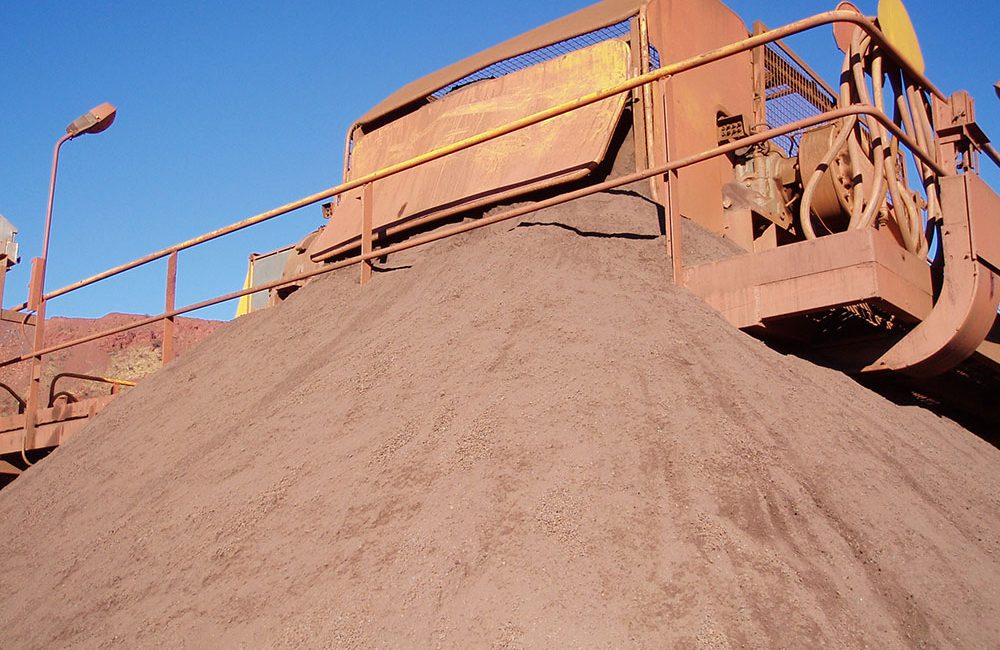
For many mining and resources operations, persistent issues such as blockages, spillage, and excessive washdown are direct drivers of downtime, lost throughput, and unnecessary operational cost.
When you factor in lost production, equipment repair, and maintenance costs, material flow downtime issues can end up costing mining and resources operations millions.
Even minor interruptions in material flow can escalate quickly. Blocked chutes lead to unscheduled stoppages at critical transfer points, including crushers, screens, and conveyor feed systems. Downstream, this leads to reduced plant availability, increased labour intervention, higher water use for clean-outs, and accelerated wear on surrounding infrastructure.
Chute Technology Materials Handling Engineer, Gian Naldi, says these challenges are not just issues to apply a patch to – they should be dealt with at the source, by designing solutions to address the root cause of the problem.
“Blockages and poor flow conditions are rarely random events,” says Naldi. “They are typically the result of how material behaviour, moisture content, and geometry interact. Once you understand that, you can engineer the problem out of the system entirely.”
Chute Technology has spent more than a decade tackling some of the toughest materials handling challenges in the mining, resources, minerals processing, and ports industries. With more than 100 chute and conveyor projects completed across ports, surface plants, and underground operations, Chute Technology’s track record shows a blend of responsiveness, practical insight, and engineering discipline.
“Chute Technology started with a specialised focus on transfer chutes, but over the past decade as our skills and work has expanded, we’ve seen greater gains by looking at the material flow from entire sites and determining where issues can be resolved, de-bottlenecking choke points, and better solutions can be employed,” said Naldi.
Designing out downtime in a NSW copper and gold operation
A recent project in NSW highlights how chute optimisation can materially improve plant performance. Chute Technology designed and engineered four transfer chutes for a copper and gold operation experiencing recurring blockages and flow instability across key transfer points.
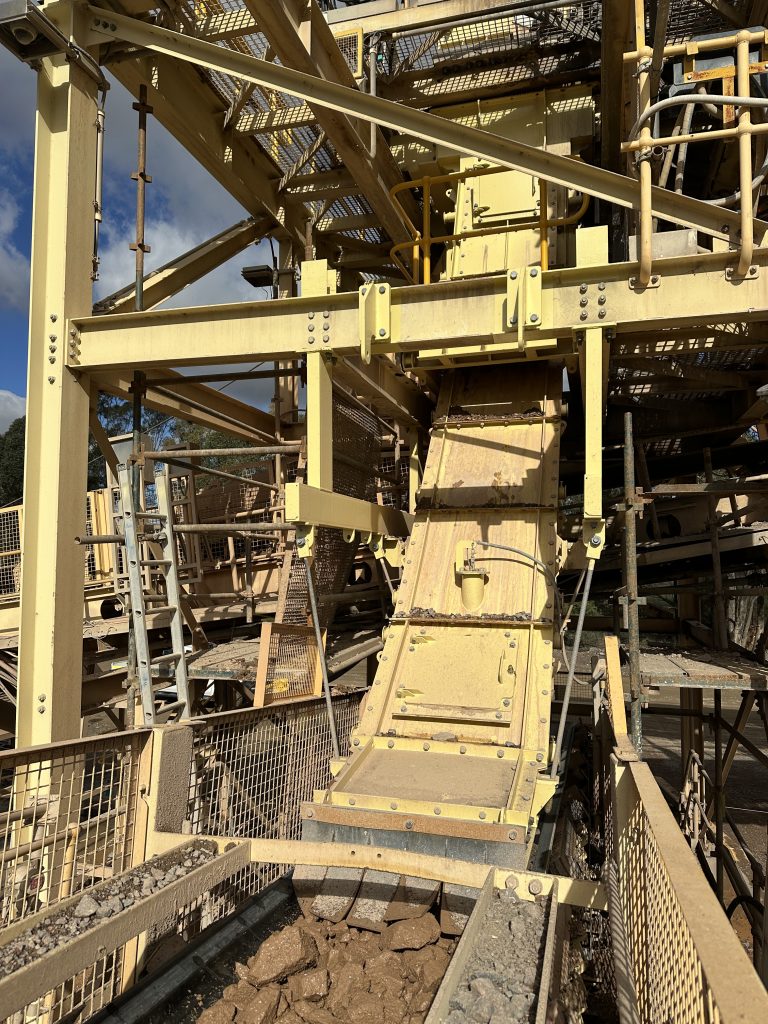
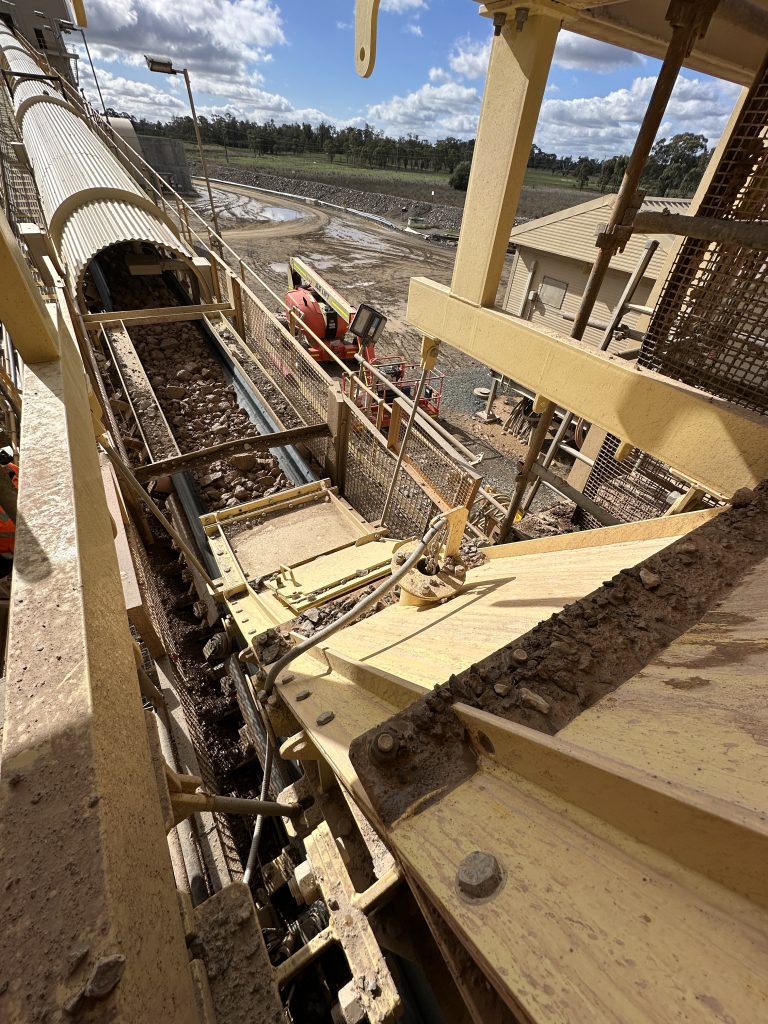
▲ A new chute in operation
The existing system required frequent intervention, with build-up and blockages contributing to unplanned downtime and increased reliance on manual cleaning processes such as hosing and physical removal of material.
By redesigning the transfer geometry and improving material trajectory control, Chute Technology eliminated key hang-up points. The outcome was a more stable and controlled flow profile across multiple transfer areas.
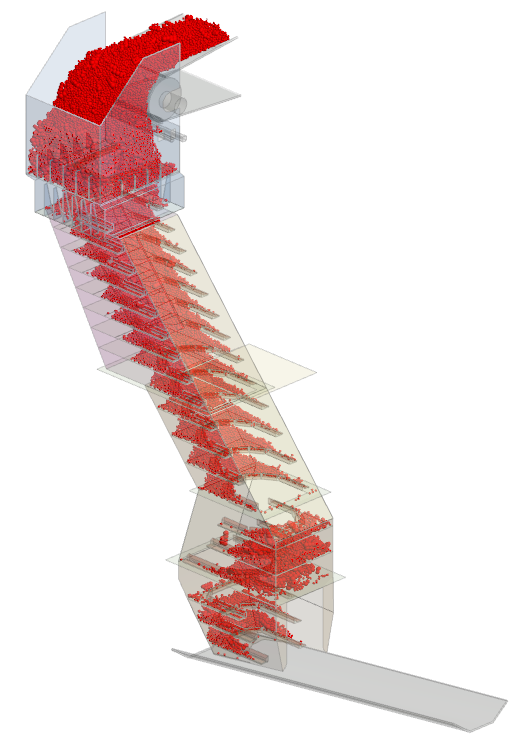
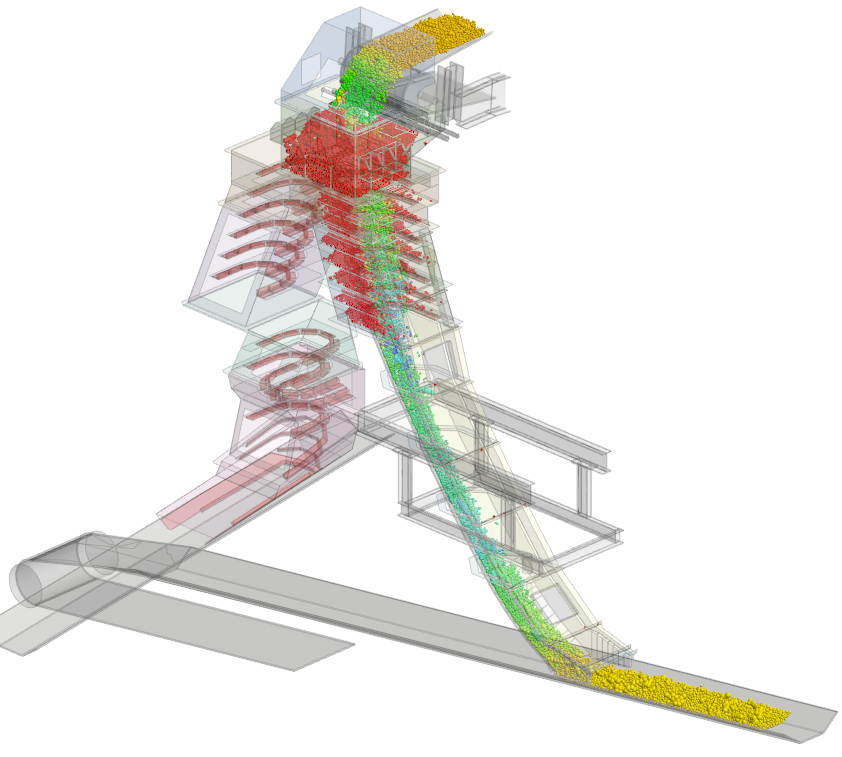
▲ Existing chute blocked (left), and new chute flowing in DEM (right)
“The goal was to remove the conditions that allowed material to settle, compact, and eventually block,” Naldi explains. “Once that’s addressed, the system becomes self-clearing rather than needing frequent interventions.”
Addressing spillage and contamination at a Hunter Valley mine
In another NSW project, a Hunter Valley mining operation had spillage from a transfer chute flowing into a sampler system, which was affecting coal quality readings.
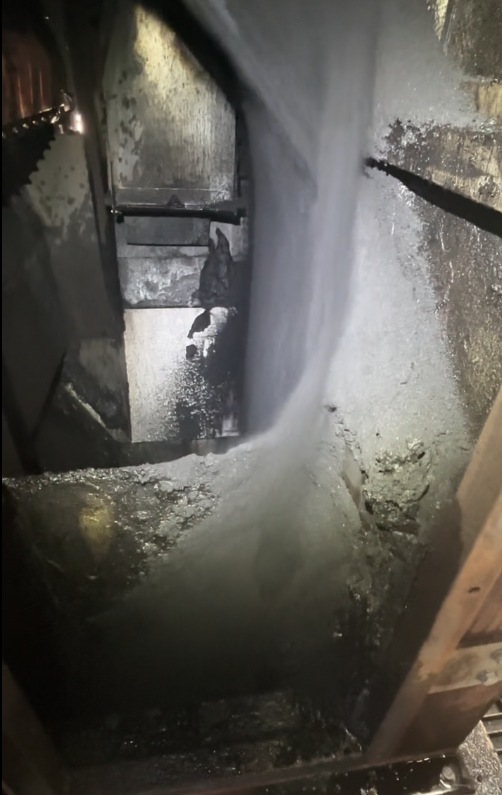
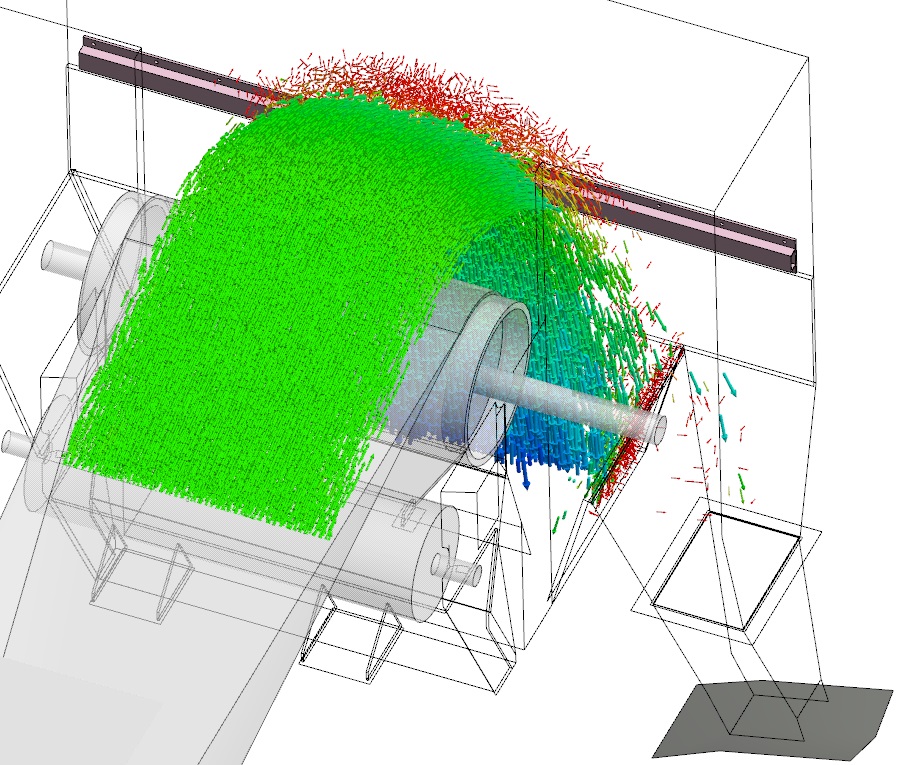
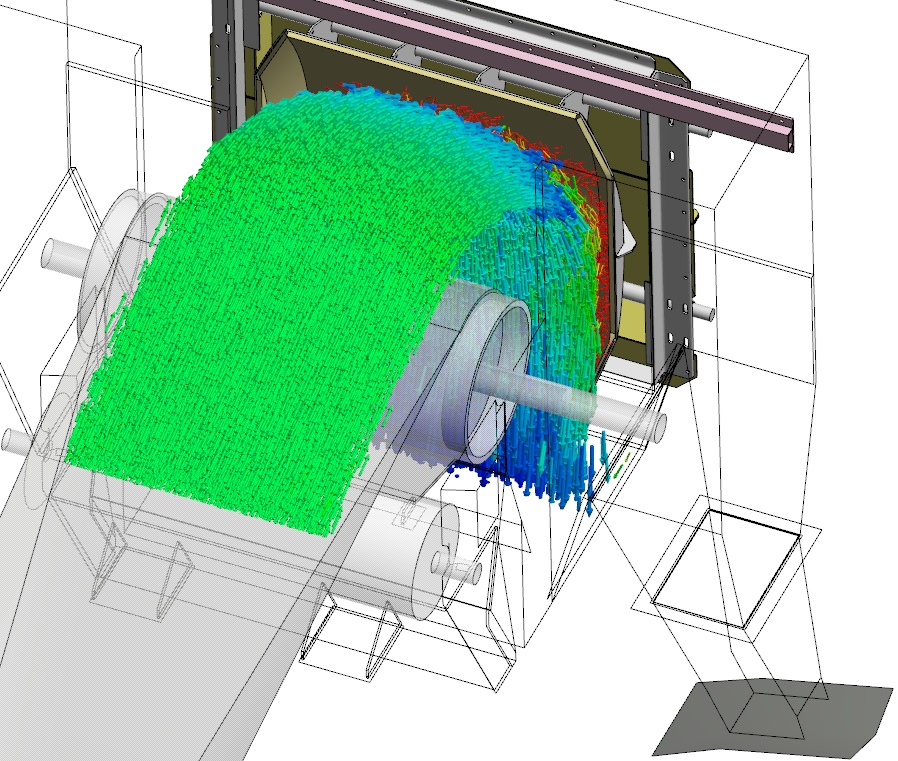
▲ Spillage contamination into sampler chute (far left), current chute in DEM validating spillage contamination into sampler chute (middle) and new design in DEM showing no spillage into sampler chute (far right).
“Essentially, coal was spilling into a side chute which is supposed to be for sampling coal only, and it would then contaminate the reading of the coal quality,” explains Naldi.
“The customer tasked us with solving the localised issue without redesigning the whole transfer chute, so Chute Technology used DEM combined with MBD (Multi Body Dynamics) to find the root cause, then develop a solution and test it before completing structural design.”
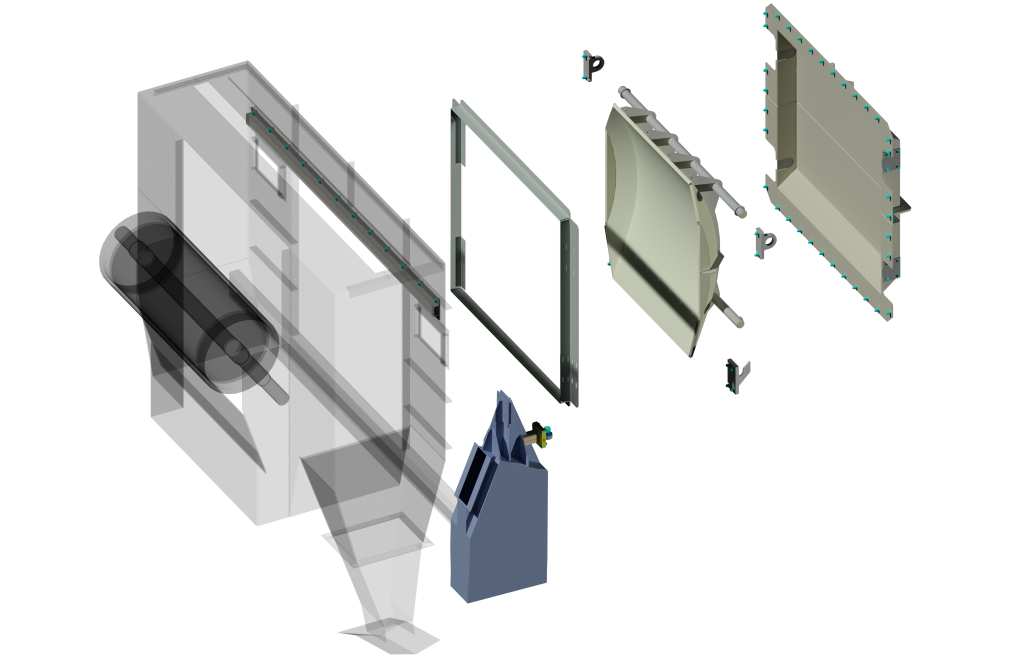
“Chute Technology engineered a solution that was on-time and on budget, meeting tight deadlines around a shutdown calendar.”
The real cost of blockages and spillage
Spillage around transfer points remains one of the most persistent inefficiencies in bulk handling plants, particularly in high-throughput mining environments.
Common consequences include:
- Loss of usable product through spillage and carryback
- Environmental contamination
- Increased water usage for washdowns and dust suppression
- Higher maintenance exposure in hazardous zones
- Reduced utilisation of skilled personnel for value-added tasks
In many operations, labour that could be focused on production optimisation is instead redirected to reactive clean-up activities such as shovelling, washdown, and unplanned maintenance support.
“Every hour spent cleaning up spillage or clearing a blocked chute is an hour not spent improving plant performance,” says Naldi. “Over time, that has a measurable impact on throughput and operating cost.”
Examples of projects where Chute Technology has addressed spillage include:
- At a major NSW coal operation, Chute Technology designed a customised chute system that removed recurring spillage and flow instability issues that had contributed to multiple hours of lost production. The redesigned system enabled continuous operation at feed rates of up to 2,000 tonnes per hour without stoppages or material loss.
- In another project involving highly cohesive coal with high clay content, Chute Technology developed a self-cleaning chute solution that reduced downtime from approximately 1,415 minutes over two months to around 20 minutes over the same period after installation. The redesign also significantly reduced associated spillage and clean-up requirements.
“With the right transfer geometry and flow control, you can substantially reduce maintenance intervention, housekeeping, and product loss while improving reliability at the same time,” says Naldi.
Engineering flow reliability into the system
Chute Technology’s approach centres on designing for material behaviour. Using Discrete Element Modelling (DEM), Finite Element Analysis (FEA), site-specific constraints, and operational data, chute systems are engineered to maintain consistent velocity, reduce impact wear, and eliminate dead zones where material can accumulate.
In practical terms, this delivers three core operational benefits:
- Reduced downtime through elimination of chronic blockages
- Lower maintenance demand, including reduced washdown and manual intervention
- Improved resource utilisation, allowing operators to focus on production-critical activities rather than reactive clean-up
This systems-based approach is particularly relevant in operations where variations in ore characteristics can significantly affect flow performance.
From reactive maintenance to predictable performance
The broader shift underway in materials handling is a move away from reactive maintenance toward predictable, engineered performance. Well-designed chutes play a central role in this transition, acting as controlled flow devices rather than passive transfer points.
“When chute systems are engineered properly, they stop being a problem area and become a stabilising element in the plant. That’s where you start to see real gains – not just in uptime, but in overall operational discipline,” say Naldi.
For mining operators facing pressure to improve throughput without expanding footprint or increasing labour intensity, chute optimisation is increasingly being recognised as a high-impact intervention.
Do you want an obligation-free materials handling site audit? Chute Technology can perform an audit to see where bottlenecks are occurring, and where material flow can be improved to enhance throughput and productivity. Chute Technology can either provide an end-to-end site audit to analyse the full materials handling process, or tailor our analysis to a specific issue that requires fixing. To request an audit, email enquiries@chutetechnology.com.au