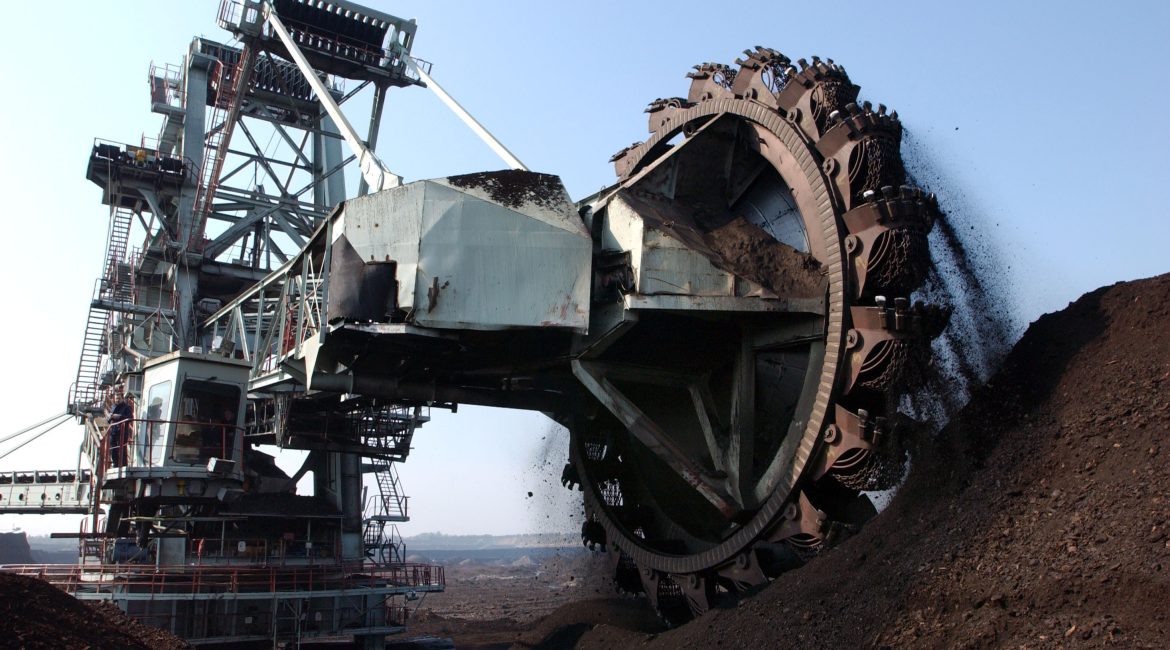
As ore and coal producers step up production in response to rising prices, some are taking the opportunity to boost plant capacity while simultaneously resolving output issues with old plant not suited to higher volumes.
Industry innovators Chute Technology say previously hidden bottlenecks in production and distribution chains extend from extraction, conveying, stacking and despatch at the mine right through to loading into and out of rail, port and energy production facilities.
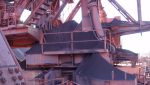
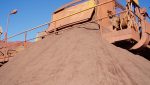
And just to make things worse, all producers are facing sustained pressure to improve their environmental and reliability performance as they boost production, with more dust issues in some areas and sticky wet coal in others. Rocky and abrasive mixtures in different areas are also wearing out plant far quicker as volumes increase.
“As Australian and international producers set out to double and treble outputs, the underlying problems are becoming starkly apparent through breakdowns, downtime, problems with sticky material throughput, and spillage, creating cleanup and safety issues,” says Chute Technology Senior Materials Handling Engineer, Gian Naldi.
“Problems are particularly immediate for miners who want to bring mothballed plant back into use quickly, because every day they lose getting up to speed has the potential to cost millions,” he says.
“The typical piece-meal approach to solving problems in one area often just causes further delay by transferring issues in one part of the production line further up the line. It’s like shooting ducks in a row – the ducks just keep on popping up. You have to take an integrated approach that goes to the root systemic issues.”
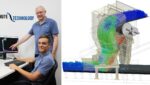
Essential to such an integrated approach are elements such as diagnostics, structural audits, DEM Modelling, FEA, process design, detailing, manufacture and providing complete turnkey projects “while working directly in partnership with the Mine Managers and Engineers, so as they have ownership in the design and are able to get the results they want.”
“Our approach at Chute Technology brings proven skills that are vital to solving typical mineral processing issues,” says Naldi. These issues include reducing wear, removing bottlenecks caused by clogging, minimising damaging impacts on belts and optimising operational safety and efficiency by curbing breakdowns and cleanups.
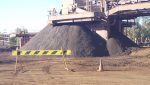
Chute Technology says an example of typical problems now being encountered include dust and spillage issues while endeavouring to boost production.
Chute Technology packages – employing the best current technologies developed from proven installations in alumina, iron and other mineral ores and coal handling facilities at mines, energy plants and ports – tackle dust problems at their source rather than attempt to control dust after it has been created and dispersed into the atmosphere.
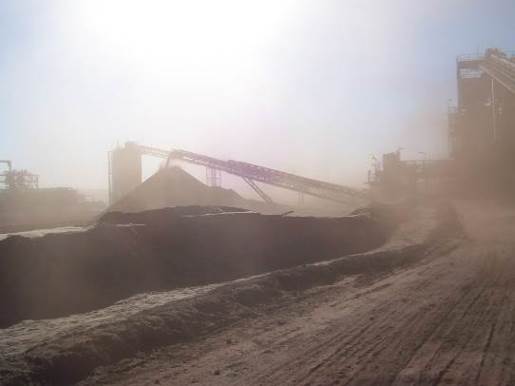
The same technologies can be applied to inlet, hood, chute, spoon, enclosure and saturation zones to address widespread spillage hazards, with their cost, downtime and safety issues, says Naldi.
“Good designs such as these – either new or retrofitted – demonstrate that environmentally sensitive production need not necessarily come at a cost to output. In fact, these chute improvement technologies have achieved major increases in production, exceeding 50 and even 80 per cent in some cases, while solving waste and spillage problems.
Chute Technology’s dust and spillage technologies feature dust-minimising transfer control stations on material handling conveyor belts, as a component of energy efficient and water-conserving technology packages for new and retrofit loadout facility projects. The new transfer stations and associated downstream technology minimise the amount of dust created in the first place, reducing water needs as well as energy required for dust collection fans and filter houses. They contain whatever dust is created within the transfer point, minimising harm to the surrounding environment.
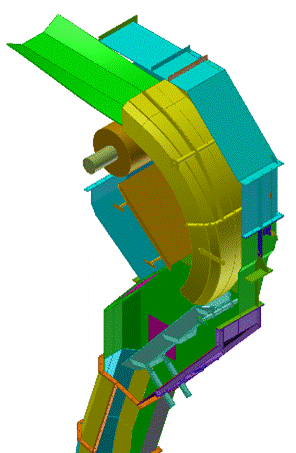
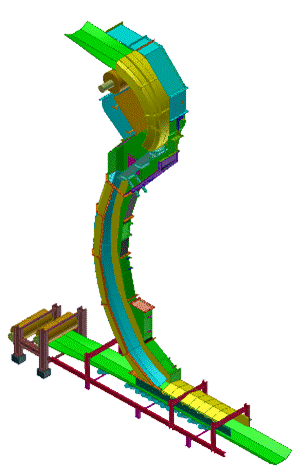
A Chute Technology transfer station proven in service, based on passive dust control systems
The new transfer technologies also curtail spillage and optimise conveyor belt width loading potentials by eliminating the disruptive steep drops and turns in conventional chutes that cause dust, blockages, spillage and wear.
“Instead of having huge energy-sucking extraction installations to collect up dust that escapes conventional chute designs, we cost-effectively engineer new transfer stations based on passive dust control principles with de-aeration chambers,” says Naldi.
At the other end of the spectrum – where excessive rock or water in coal is the problem – the same three-pronged approach to problem solving can be applied with outstanding results.
“The integrated packages – which apply to completely new plants and problem areas within existing plants – deploy technologies whose availability and application may have been too fragmented or unmanageable previously and put into the too-hard basket.”
“We have bought some mines back into production recently in periods of weeks rather than months, because their owners approached their issues in an integrated manner rather than trying to solve them piecemeal.”
“To be really effective, you have to take an integrated approach that looks deeply into where the problem really comes from then move downstream through a total solutions approach.”
“This doesn’t have to be expensive or time-consuming – in fact it saves money and boosts production quicker – but you have to be thorough, logical and experienced.”